


Recent geopolitical tensions and uncertainty surrounding the Federal Reserve’s next moves have alarmed investors, who have returned to seeking security in the ultimate safe-haven asset. After stabilizing around $4,000 per ounce for several weeks, gold has surged sharply by about $400 (approximately 10%) since the beginning of August, recording what could be the best monthly performance of the century. The last time the yellow metal increased by 13% or more was in September 1999.
Federal Reserve and Weak US Employment Behind the Surge
Key factors driving the rise in the safe-haven asset’s price include a dovish stance from the US central bank (Fed) and weak employment data that came in softer than initially anticipated. Still-moderate inflation data eases concerns over monetary policy tightening, boosting the market for safe-haven assets.
Investor doubts persist regarding the newly elected Federal Reserve Chair, Kevin Warsh, whose statements have called into question the financial institution’s independence—nor did his comments regarding the 2% inflation target stir enthusiasm.
The bond market has gone on alert, with benchmark 10-year Treasury yields at their highest levels in 18 months. All of this has greatly benefited gold, which in the first weeks of August rose from 113 euros per gram to approximately 122.50 euros per gram: an increase of over 8.4%. The rapid rise of the metal then led to profit-taking as a natural consequence: on August 18 came the pullback, with the yellow metal closing at 120.30 euros per gram.
To track the price of gold in real time, visit our page dedicated to gold prices in euros per gram.
Central Banks Continue Buying
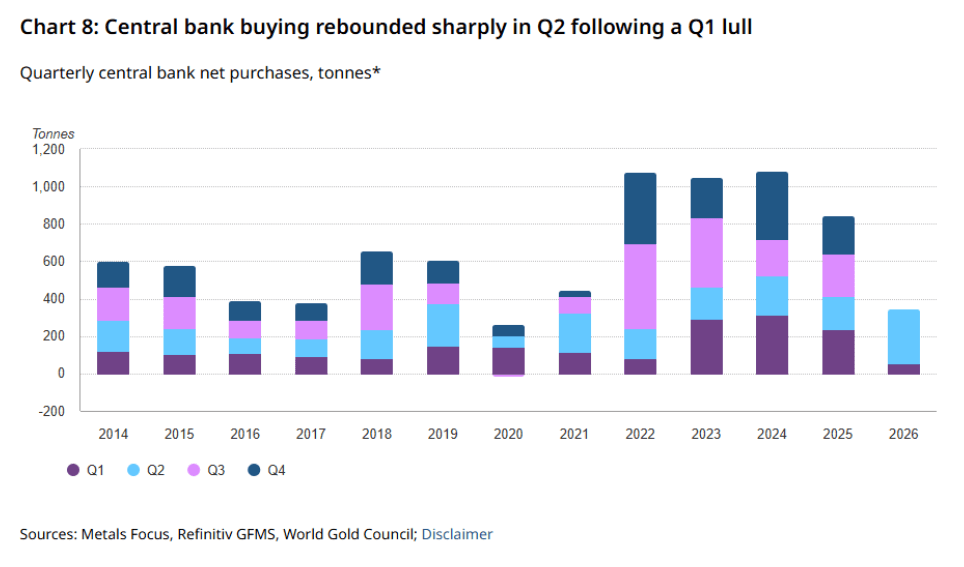
Central banks took advantage of the dip in gold prices to replenish their official reserves. In the second quarter, net purchases totaled 289 tonnes: five times the 57 tonnes bought in the first quarter and 62% more compared to the same period in 2025. This represents the highest value ever recorded in a second quarter.
Purchases were dominated by the National Bank of Poland, which added 51 tonnes to its vaults. At the end of June, Polish gold reserves stood at 632 tonnes, against a declared target of 700. On the second and third steps of the podium were Uzbekistan (+16 tonnes) and Kazakhstan (+15 tonnes).
But that’s not all. In the annual survey conducted by the World Gold Council on gold reserves, 89% of the central banks surveyed stated that they expect an increase in global gold reserves over the next twelve months.
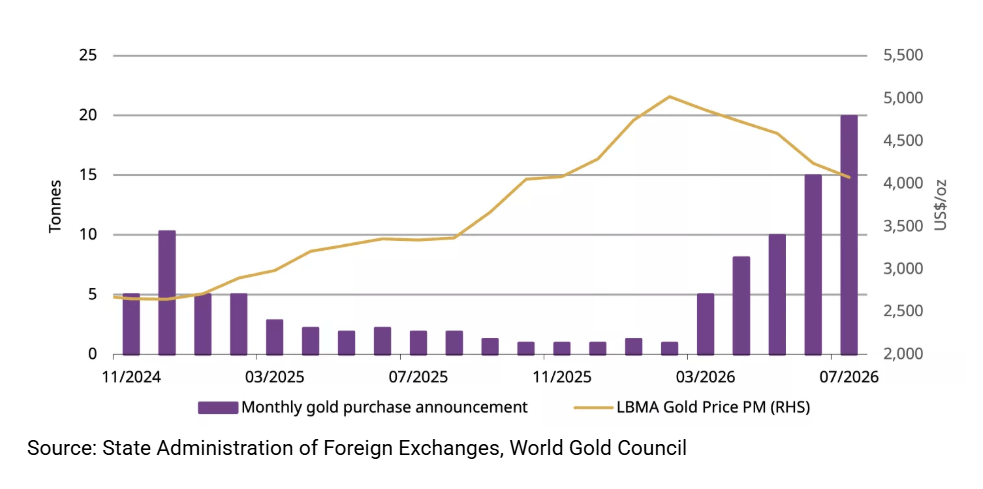
In East Asia, the People’s Bank of China reached its twenty-first consecutive month of gold purchases. In July, it added 20 tonnes of the yellow metal to its reserves, the most in a single month since October 2023. Imports are also rising: 764 tonnes in the first quarter, up 138% compared to 2025.
If you want to learn more about the basics of how physical custody and the taxation of these assets work, read our guide to investment gold.
Sources
Reuters, Central banks spearhead renewed gold rush
Gold.org, China gold market update: Strong official sector buying in July