
GOLD quotation
Spot
(Eur/gr)
BID: 78,17
ASK: 78,31
(Usd/oz)
BID: 78,17
ASK: 78,31
SILVER quotation
Spot
(Eur/gr)
BID: 78,17
ASK: 78,31
(Usd/oz)
BID: 78,17
ASK: 78,31

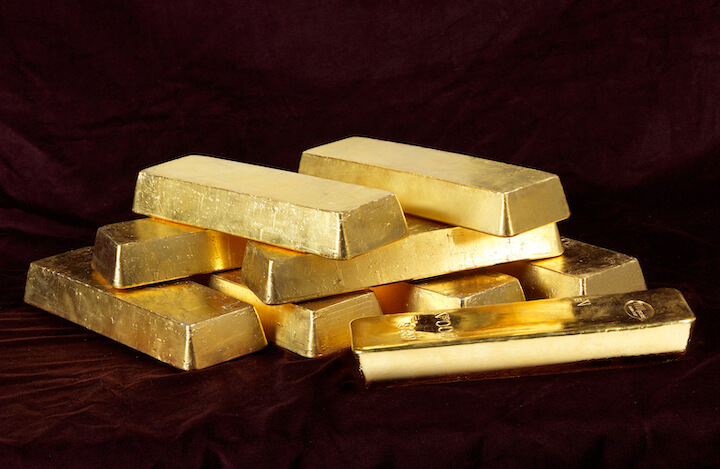
Long regarded as a safe haven for investors, gold has experienced a long and dynamic history in terms of pricing. Over the decades, the evolution of gold prices has reflected global economic, political, and social challenges, showing significant changes over time.
Let’s explore the history of gold prices from 1900 to the present day, with particular attention to the remarkable surge in prices recorded during the 1970s.
Until the 1930s, the price of gold remained relatively stable, supported by the Gold Standard — a system in which a country’s currency was directly linked to its gold reserves.
The Great Depression of the 1930s led many countries to abandon the Gold Standard, causing fluctuations in gold prices.
Despite this, gold prices remained relatively stable until the 1960s, thanks to the Bretton Woods Agreement, which linked global currencies to the US dollar. In turn, the dollar was pegged to gold at a fixed rate of 35 dollars per ounce.
The 1970s marked a major turning point in the history of gold prices.
With the end of the Bretton Woods Agreement and the abandonment of the Gold Standard by the United States in 1971, gold prices were allowed to fluctuate freely on the market.
What followed was an extraordinary rise in gold prices: between 1970 and 1980, gold increased from around 35 dollars per ounce to a peak of over 800 dollars per ounce.
This sharp increase was driven by a combination of high inflation, geopolitical tensions, economic uncertainty, and growing demand for gold as a safe-haven asset, increasingly valued by investors.
After the surge in gold prices during the 1970s, the 1980s saw a correction and subsequent price stabilisation.
During the 1980s and 1990s, gold prices were influenced by several factors, including greater global economic stability, low inflation rates, and reduced demand for gold as an investment. Throughout this period, gold prices generally fluctuated between 300 and 500 dollars per ounce.
The past two decades have seen renewed interest in gold, as gold prices over the last 50 years already show an overall upward trend. This trend became more pronounced from the early 2000s onwards, driven by financial crises such as the 2008 crisis, geopolitical tensions, and growing demand from emerging markets such as China and India.
In 2011, gold reached a new all-time high, surpassing 1,900 dollars per ounce, before stabilising once again.
Looking at the historical evolution of gold prices provides valuable insight into global economic challenges and trends.
From the Gold Standard to the turbulent 1970s and the challenges of the new millennium, gold has consistently acted as a barometer of global economic conditions.
Although historical gold prices have fluctuated over time, one thing remains certain: gold will continue to play a key role in the global financial landscape.