
GOLD quotation
Spot
(Eur/gr)
BID: 78,17
ASK: 78,31
(Usd/oz)
BID: 78,17
ASK: 78,31
SILVER quotation
Spot
(Eur/gr)
BID: 78,17
ASK: 78,31
(Usd/oz)
BID: 78,17
ASK: 78,31


When we talk about gold, we immediately think of the intense, brilliant colour of the precious metal as it is found in nature. In reality, there are different types of gold, created artificially to modify its characteristics and adapt it to various uses. Yellow gold, white gold, rose gold and red gold are the main types: they differ not only in colour, but above all in their composition, which determines their properties, and in how the metal is used.
Pieces of shiny gold nuggets resting on a rough brown stone surface, with a dark background.
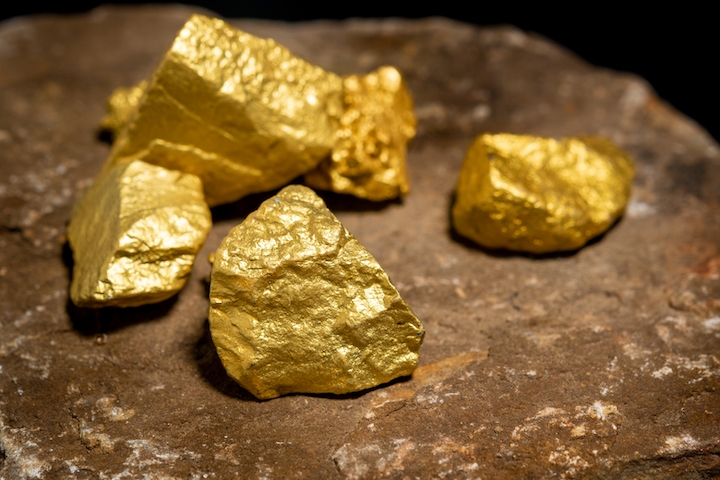
Let’s take a step back: gold is found in nature in the form of flakes, grains or nuggets. Pure gold, in its natural state, is not at all as hard as we know it, but is instead particularly malleable and therefore easily deformable: this characteristic makes it extremely difficult to work with for the creation of jewellery and other precious products.
For this reason – as well as to reduce its cost – in most cases it is melted down with other metals to make it more resistant.
The value of gold is estimated by its carat weight: the carat is the unit of measurement used to indicate the amount of gold present in a piece of jewellery or other product. By convention, the maximum value is set at 24 carats, which corresponds to pure gold.
When gold is not pure, it is melted with other metals to form an alloy: silver and copper are usually added, but other possible alloys include nickel, rhodium or platinum. As the percentage of other metals increases, the carat weight of the gold decreases, and so does its economic value.
The metals are melted at extremely high temperatures: as it cools, the metal alloy solidifies and takes on its final colour, determined by the percentages of gold and other metals it contains.
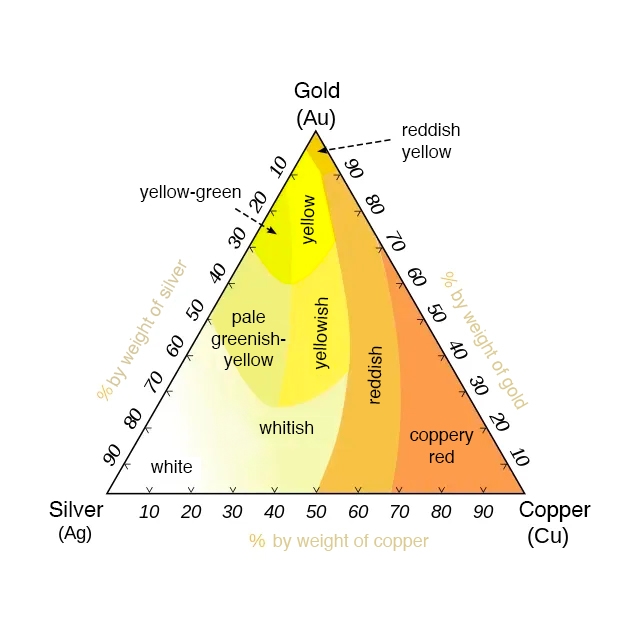
The colours of gold – yellow, white, pink and red are the main ones – are therefore determined by the different percentages of the metals that compose it.
This chart is a useful tool for predicting the colour of the final product, based on the percentages of the three most frequently used metals: gold, silver and copper.
Other techniques have also been developed to change the colour of gold jewellery, such as galvanisation: this involves a special bath that allows the metal in the solution to coat the surface of the jewellery, changing its appearance. One of the most common types of galvanisation is with rhodium, which is used to give white gold its typical shiny appearance.
Known since ancient Egyptian times, yellow gold has always been associated with the idea of splendour.
Yellow is the colour of the metal in nature: very intense, tending towards orange, it retains this characteristic in its pure form, 24-carat gold, used mainly for making gold bars and collectible coins.
In jewellery, 18-carat yellow gold is used, made from an alloy composed of 75% gold and the remaining 25% from varying percentages of silver (7-12%) and copper (13-18%).
The greater the presence of other metals, the less intense the yellow colour will be: in less valuable jewellery, for example, 9 kt gold is often used, which contains 37.5% gold and is therefore commonly referred to as “375 gold”.
While yellow gold is the most traditional colour for jewellery, white gold has become increasingly popular over time, as many consider it more discreet and therefore more elegant.
Invented in 1800, white gold became widespread in the late 1920s: used as an economical alternative to platinum, which was used in the military, it soon became the second most popular material for jewellery after yellow gold. In recent decades, it has become increasingly fashionable, especially for engagement rings and wedding bands.
But what does white gold contain? Let’s start from the assumption that white gold jewellery is often certified as 18 carats – known as 750 white gold – meaning that it is 75% gold and the remaining 25% nickel, palladium, manganese, silver or platinum.
The gold and nickel alloy makes the metal more resistant, ideal for rings and brooches, but it could cause allergies. The alloy with palladium, on the other hand, creates a softer gold and is used in jewellery that requires stones to be set.
As mentioned above, the unmistakable appearance of white gold is not so much determined by its chemical composition as by the galvanisation process, which coats the jewellery with a layer of rhodium or platinum, giving it its typical shine.
Rhodium plating also makes the jewellery more resistant. However, rhodium is an expensive metal, and its use in the galvanisation process tends to make white gold jewellery more expensive than yellow gold creations.
Galvanisation is also the reason why, after a certain period of time, white gold begins to turn yellow: the rhodium coating begins to wear away, revealing the more golden colour of the alloy.
The process is determined by various factors, such as how often the jewellery is worn, the pH of the skin, the use of aggressive detergents, but also external elements such as air quality and the level of pollution in the surrounding environment.
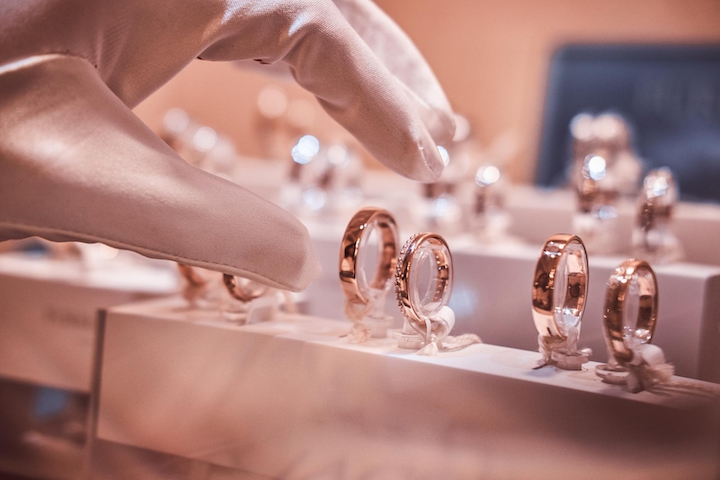
For a very long time, rose gold was called Russian gold because it was extremely popular in the Tsarist Empire in the early 19th century.
Over time, it also spread to Europe and has made a comeback in recent decades: it is used for all types of jewellery, including wedding rings, ideal for more original couples.
How is rose gold obtained? Its composition is determined by an alloy of gold, copper and often silver, in varying proportions depending on the value of the jewellery.
18-carat rose gold is normally composed of 75% gold, 20% copper and 5% silver. Less valuable – and therefore less expensive – are 12-carat rose gold jewellery items, composed of 50% gold and 50% copper.
The only difference between rose gold and red gold is the colour, which, as we have learned, is determined by the chemical composition. Let’s find out what the differences are.
While rose gold is composed of an alloy of gold, copper and silver, red gold owes its more intense colour to a purer composition: 75% gold and 25% copper, for 18-carat gold jewellery.
Like its pink counterpart, red gold was particularly appreciated by the Russian nobility: it was the famous jeweller Peter Carl Fabergé who promoted its use, employing it for some of his precious decorative eggs in the second half of the 19th century.
In Europe, the fashion for red gold took hold in the early 20th century, when Cartier created a red gold version of its famous Trinity ring in 1924.
In recent years, demand for red gold has gradually increased, especially in East Asian countries. It is used in all types of jewellery – earrings, bracelets, necklaces, engagement rings and wedding rings – and is often combined with precious stones and diamonds.
Its value is determined not only by its composition, but also by its aristocratic heritage, the originality and rarity of the creations, and its physical characteristics: strength and durability.
As we have explored, the value of gold is not determined by its colour, but by its composition: beyond the metals used to make the alloy, what makes the difference in the value – and therefore the cost – of a piece of jewellery is the amount of pure gold in the product.
The elements that are melted with gold – such as copper, palladium, silver, nickel, zinc and platinum – affect the physical characteristics of the alloy and determine its use (based on greater or lesser ductility) as well as, of course, the final colour of the precious object.